
Affiliate Disclosure: This post may contain affiliate links. As an Amazon Associate, Foodarina earns from qualifying purchases. If you purchase through these links, we may earn a small commission at no extra cost to you. Please read our full disclosure for more info. Nutritional information is an estimate. Foodarina does not provide medical or dietary advice — consult a qualified professional before changing your diet or adding supplements. Full disclaimer.
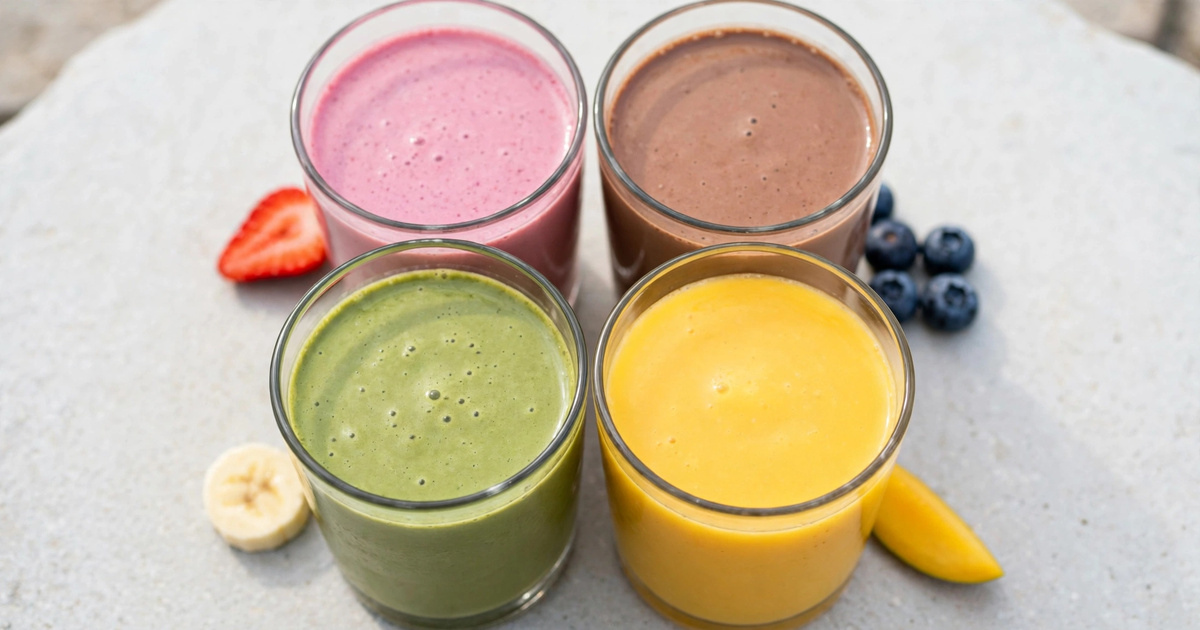
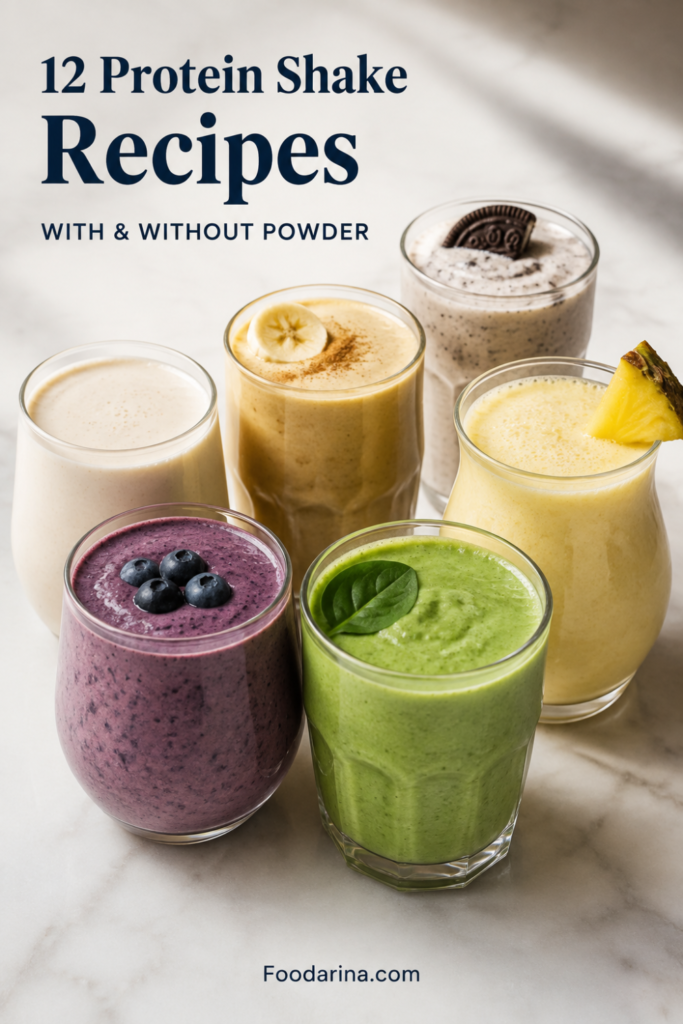
These 12 protein shake recipes cover fruit, coffee, green, tropical, and dessert-inspired flavors, with powder and whole-food options ready in about five minutes.
Use the same blending framework for every recipe, then choose chocolate peanut butter, strawberry banana, iced coffee, matcha, berry, mango, cottage cheese, or piña colada.
Some combinations use protein powder for convenience, while others build their base with Greek yogurt, cottage cheese, nut butter, oats, or seeds; exact protein totals vary with the brands and portions you choose.
The Load Order for Powder and No-Powder Shakes
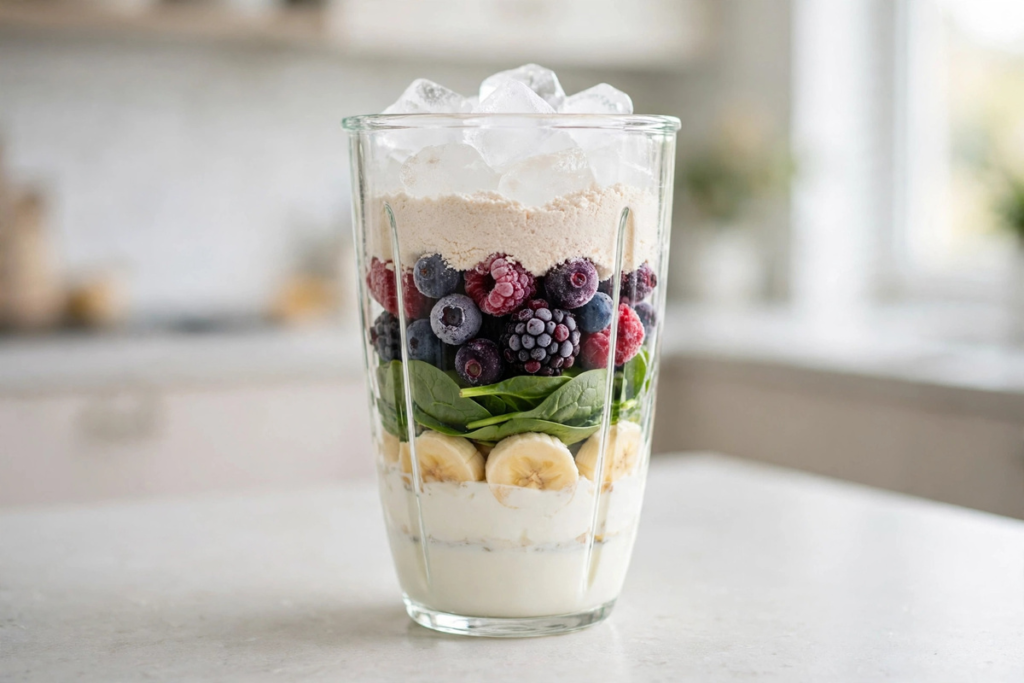
In a standard upright blender, add the liquid first, followed by Greek yogurt or cottage cheese, soft fruit, leafy greens, frozen fruit, protein powder, and ice.
This order gives the blades a fluid base while keeping the densest ingredients above it.
Start on low, increase steadily to high, and blend for 40 to 50 seconds. A smoothie preset can replace that manual sequence.
Stop when the mixture circulates freely and no frozen pieces remain.
Keep thick whole-food protein sources close to the liquid.
If Greek yogurt or cottage cheese sits above a tightly packed frozen layer, turn off the blender, remove the lid, stir the ingredients, and resume.
The chocolate peanut butter shake applies that framework first.
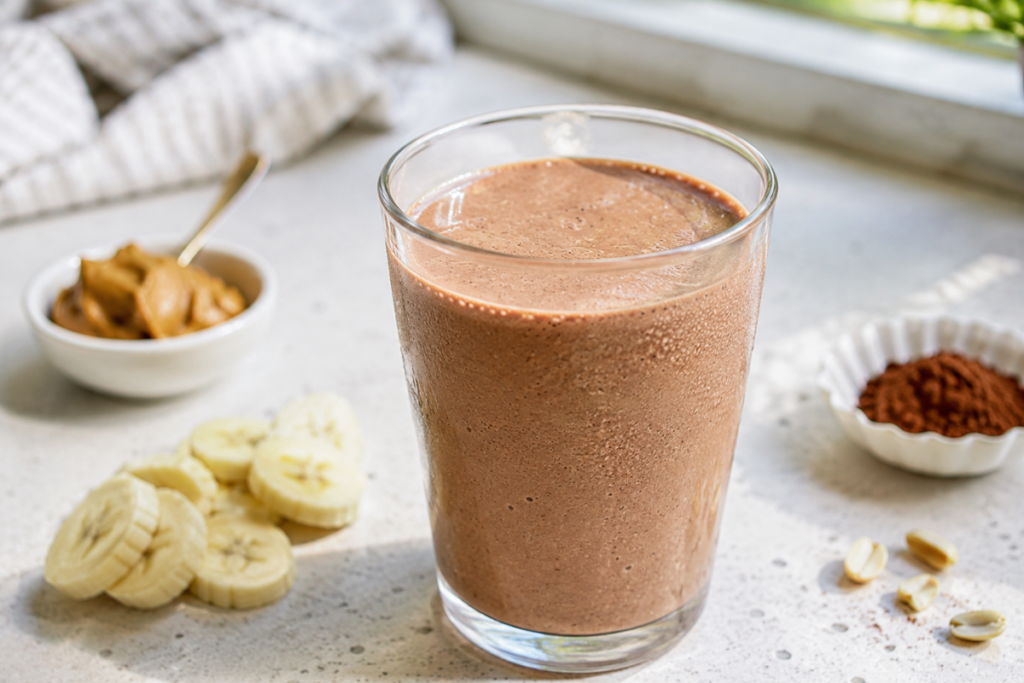
1. Chocolate Peanut Butter: The Dessert-Flavor Starting Point
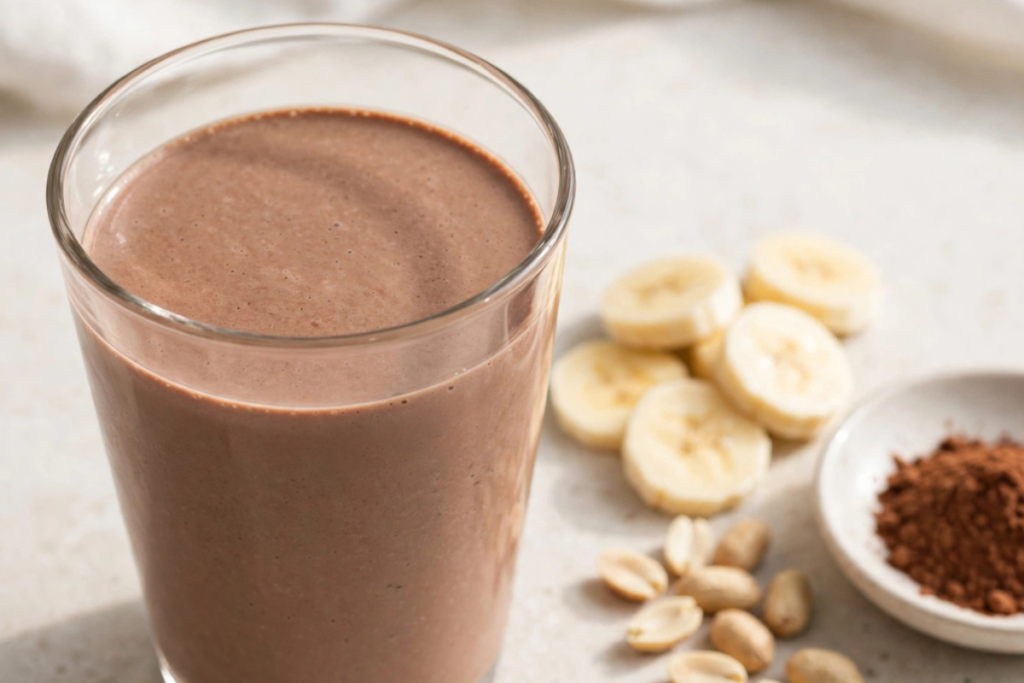
This rich shake suits anyone who wants familiar chocolate flavor without turning breakfast into another plain vanilla blend.
Its defining ingredients are milk, frozen banana, cocoa powder, peanut butter, and chocolate protein powder. Start with 1 cup milk per frozen banana. If the blend stops circulating, add 1 tablespoon of milk.
Chocolate peanut butter protein shakes recur across Pinterest autocomplete, confirming the combination as a recognizable combination. For a peanut-free version, replace the peanut butter 1:1 with sunflower seed butter.
The strawberry-banana option brings a brighter, fruit-forward change next.
2. Strawberry Banana: The Familiar Powder-Optional Blend
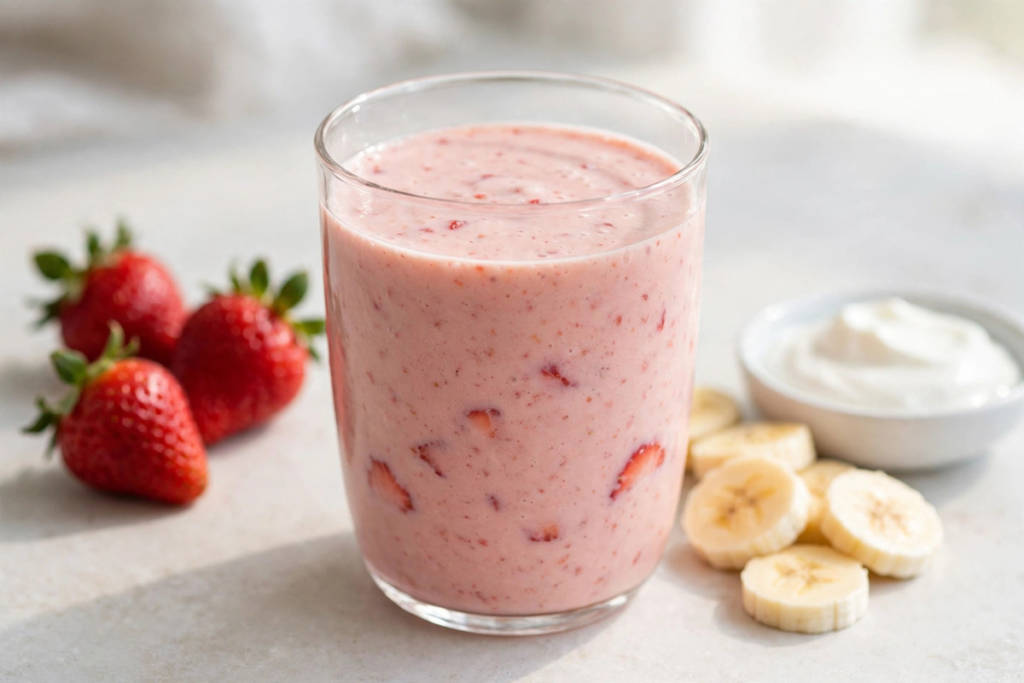
This fruit-forward shake is for readers who want a familiar breakfast blend that works with or without vanilla protein powder.
Its defining ingredients are milk, frozen strawberries, banana, Greek yogurt, and optional vanilla protein powder. For a thick but drinkable result, start with 1 cup milk and 1 cup frozen strawberries, then let the banana and yogurt add body.
Strawberry and banana recur in Pinterest autocomplete, supporting the combination as a recognizable recipe choice. For a dairy-free version, replace the milk 1:1 with unsweetened soy milk and the Greek yogurt 1:1 with plain soy yogurt.
Use the complete strawberry banana smoothie guide for exact measurements and method steps.
The iced coffee vanilla shake adds a café-style option next.
3. Iced Coffee Vanilla: The Café-Style Breakfast Option
This café-style shake is for readers who want coffee and breakfast in one cold, creamy blend.
Its defining ingredients are cooled coffee, milk, frozen banana, vanilla protein powder, and Greek yogurt. Use a 1:1 coffee-to-milk ratio—for example, 1/2 cup of each—so the coffee stays noticeable without making the shake too thin.
Coffee, vanilla, and banana appear in Pinterest autocomplete, supporting this as a distinct flavor branch. For a caffeine-free version, replace the cooled coffee 1:1 with cooled decaffeinated coffee.
The blueberry Greek yogurt shake shifts next to a fruitier, powder-free base.
📌 Pin this post: Save these protein shake recipes for easy access to powder-based and whole-food options.
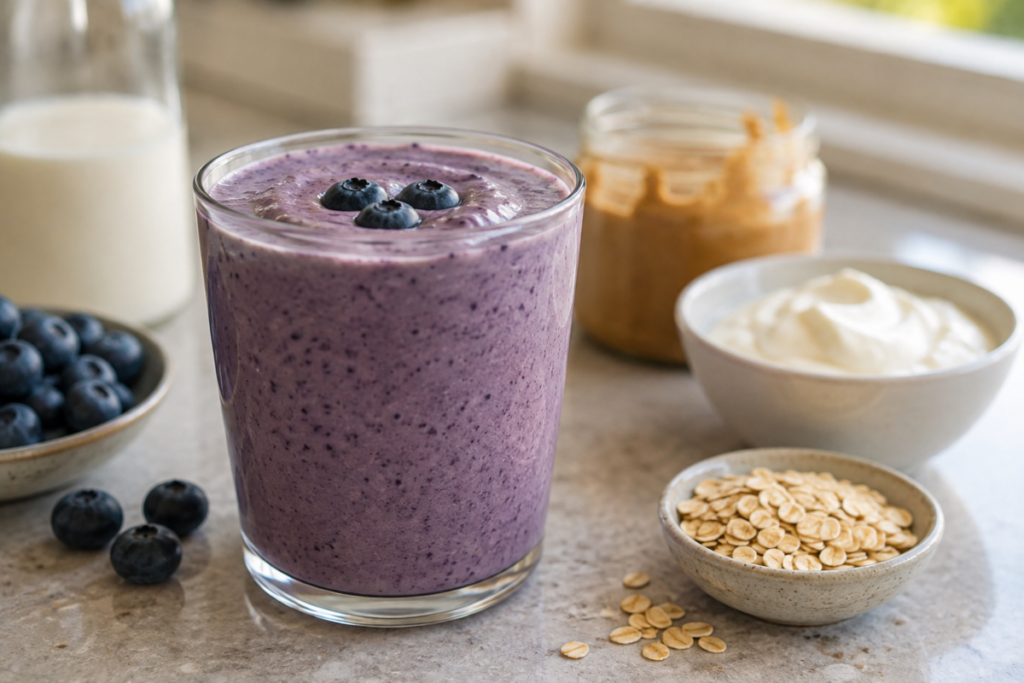
4. Blueberry Greek Yogurt: The First No-Powder Recipe
This powder-free blueberry smoothie is for readers who want a fruit-led shake built around whole-food ingredients rather than a scoop.
Its defining ingredients are frozen blueberries, Greek yogurt, milk, oats, and optional nut butter. For a thick but drinkable texture, use 1 cup frozen blueberries with 3/4 cup milk. If the mixture stops circulating, add milk 1 tablespoon at a time.
Blueberry, Greek yogurt, and no-powder options recur in Pinterest autocomplete, supporting this as a distinct recipe branch. For a dairy-free version, replace the dairy milk 1:1 with unsweetened soy milk and the Greek yogurt 1:1 with plain soy yogurt.
The peanut butter banana blend continues the no-powder route next.
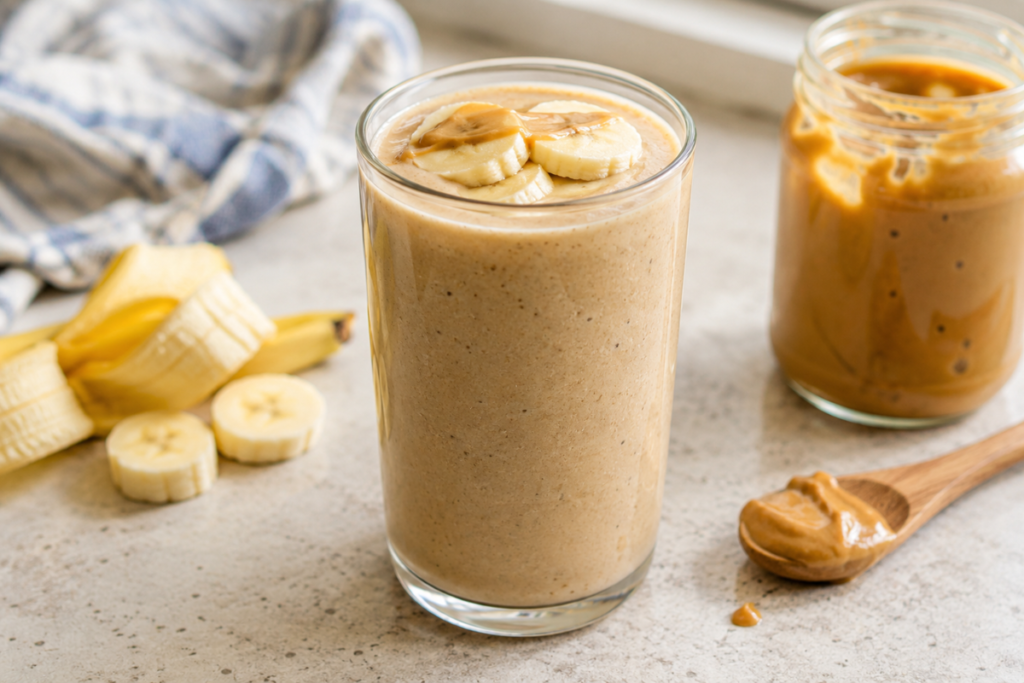
5. Peanut Butter Banana: The Pantry-Friendly No-Powder Blend
This pantry-friendly smoothie is for readers who want a creamy, familiar blend without relying on protein powder.
Its defining ingredients are milk, frozen banana, peanut butter, Greek yogurt, and cinnamon. Start with 3/4 cup milk for every 1 cup of frozen banana slices to keep the smoothie thick but easy to drink. If it stops circulating, add another tablespoon of milk.
Peanut butter, banana, and no-powder recipes recur in Pinterest autocomplete, supporting this as a practical whole-food option. For a nut-free version, replace the peanut butter 1:1 with sunflower seed butter.
The matcha vanilla smoothie introduces a lighter green flavor next.
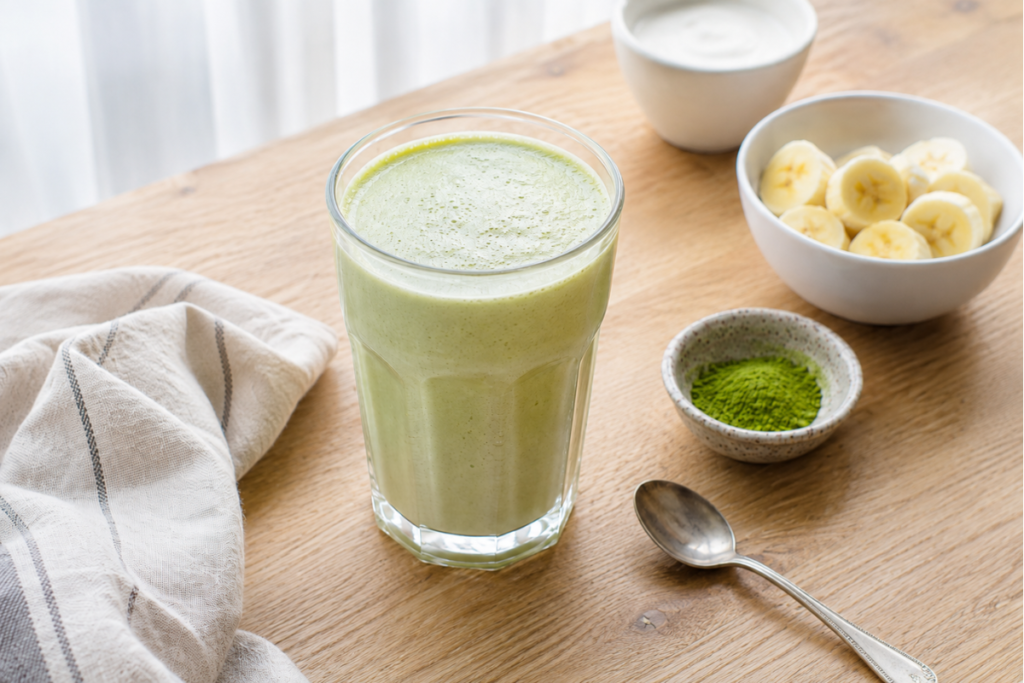
6. Matcha Vanilla: The Powder-Based Green Change of Pace
This creamy green smoothie suits readers who want an earthy alternative to fruit-heavy or chocolate-based protein shakes.
Its defining ingredients are milk, frozen banana, vanilla protein powder, matcha, and Greek yogurt. Start with 1 teaspoon of matcha so its flavor remains noticeable without overwhelming the vanilla and banana.
Pinterest autocomplete includes “high protein matcha smoothie,” “protein shake matcha,” and “protein smoothie matcha,” supporting this distinct flavor branch.
For a whole-food version, omit one scoop of protein powder, add 1/2 cup of Greek yogurt, and reduce the milk by 1/4 cup to preserve the consistency.
The mango Greek yogurt smoothie shifts next to a brighter tropical flavor.
📌 Pin this post: Save these 12 protein shake recipes for easy access to powder-based and whole-food options.
7. Mango Greek Yogurt: The Tropical No-Powder Option
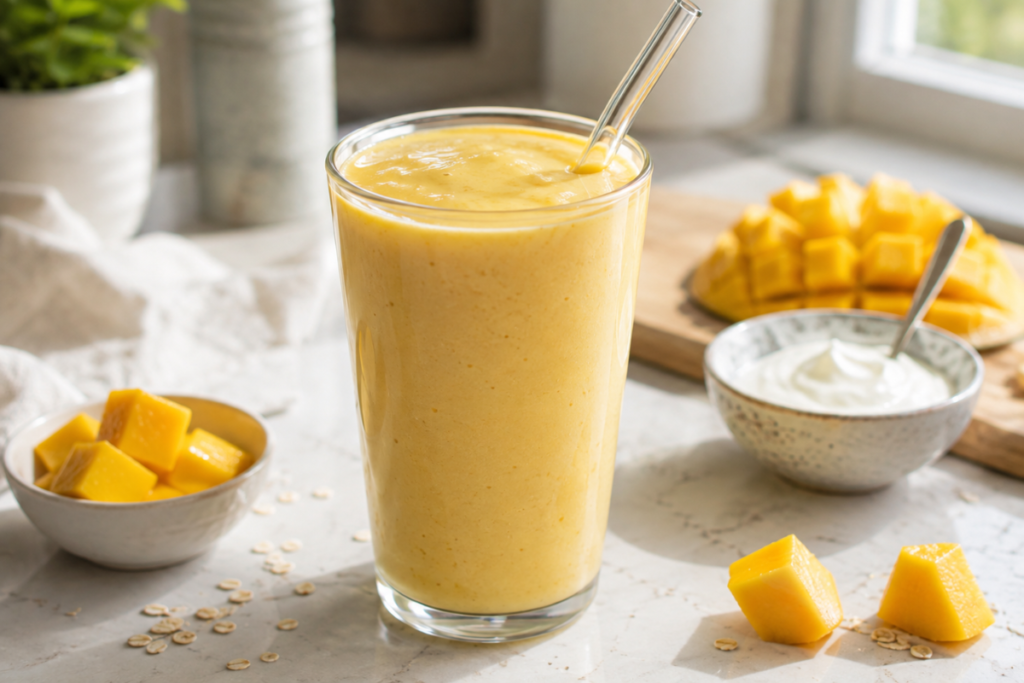
This tropical smoothie suits readers who want a bright, fruit-led protein shake without using protein powder.
Its defining ingredients are frozen mango, milk, Greek yogurt, oats, and lime. Start with 1 cup frozen mango and 3/4 cup milk for a thick but drinkable texture. If the mixture stops circulating, add another tablespoon of milk.
Pinterest autocomplete includes mango protein-smoothie searches and multiple Greek-yogurt protein-smoothie searches, supporting this whole-food combination. For a dairy-free version, replace the milk 1:1 with unsweetened soy milk and the Greek yogurt 1:1 with plain soy yogurt.
The green Greek yogurt blend adds leafy greens without losing its fruit-led character.
8. Green Greek Yogurt: The Fruit-Led Spinach Blend
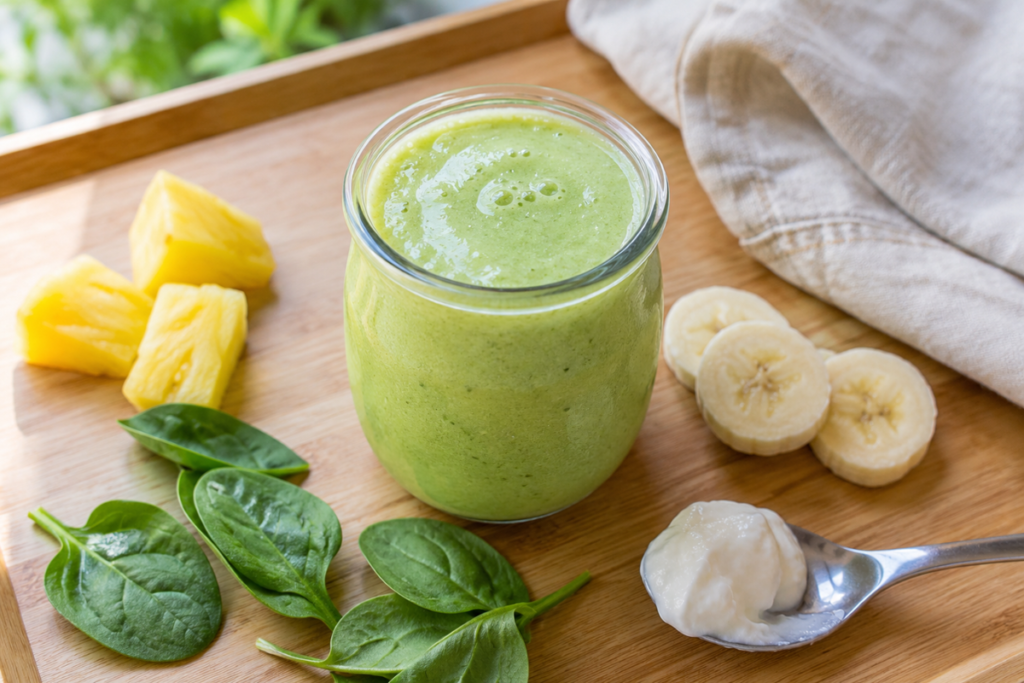
This green smoothie suits readers who want leafy greens in a mild, fruit-led shake without protein powder.
Its defining ingredients are milk, Greek yogurt, frozen pineapple, banana, and baby spinach. Use 1 cup milk per 1 1/2 cups frozen fruit. If green flecks remain, blend the spinach, milk, and yogurt for 20 seconds before adding the fruit.
Pinterest autocomplete includes spinach protein-smoothie searches and multiple Greek-yogurt protein-smoothie searches, supporting both smoothie elements. For a less-sweet version, replace half the frozen pineapple 1:1 with frozen zucchini.
The vanilla oat shake returns to a neutral breakfast-style flavor next.
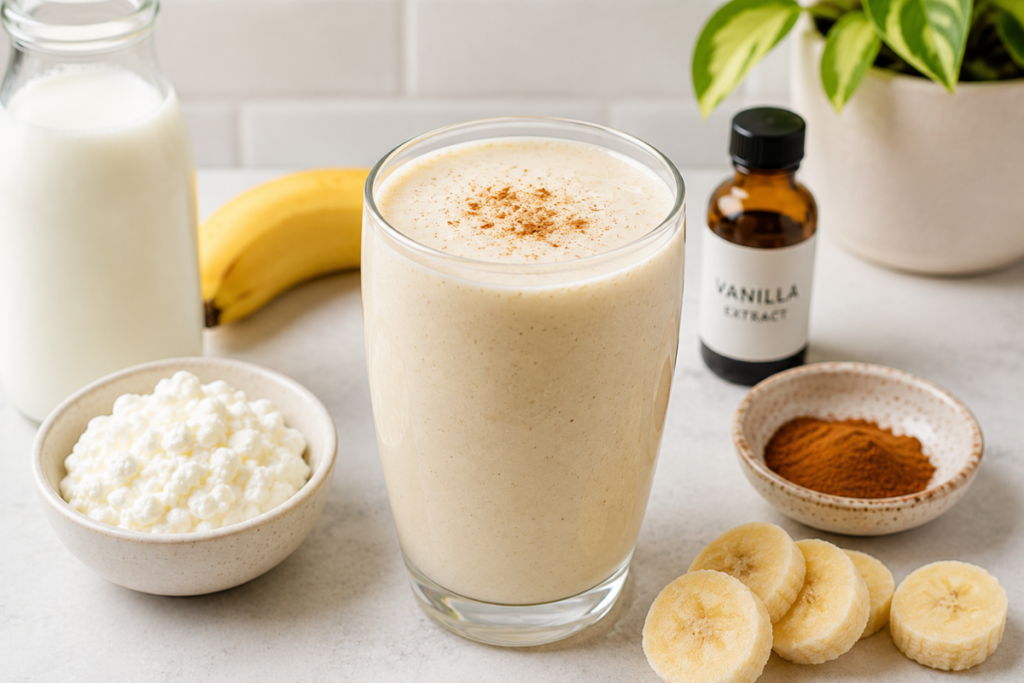
9. Vanilla Cottage Cheese: The Creamy No-Powder Base
This mild vanilla shake suits readers who want a creamy whole-food protein base without protein powder.
Its defining ingredients are cottage cheese, milk, frozen banana, vanilla, and cinnamon. Use 1/2 cup cottage cheese with 3/4 cup milk so the mixture stays thick but drinkable. Blend those two ingredients for 20 seconds before adding the banana, vanilla, and cinnamon.
Pinterest autocomplete includes cottage-cheese protein-shake and protein-smoothie searches, supporting this no-powder branch. For a tangier base, replace the cottage cheese 1:1 with plain Greek yogurt; the flavor and texture will differ.
The high-fiber berry smoothie adds oats and chia next.
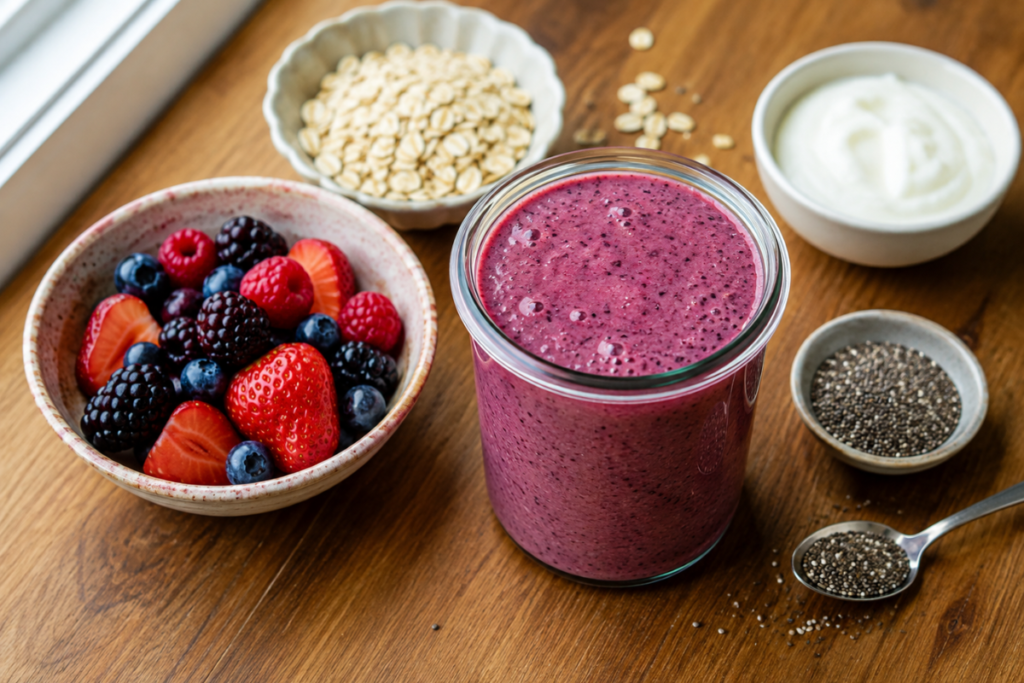
10. High-Fiber Berry: The Oats-and-Chia No-Powder Blend
This berry smoothie suits readers who want a no-powder blend with oats and chia seeds for added fiber and body.
Its defining ingredients are mixed berries, milk, Greek yogurt, oats, and chia seeds. Keep the oats to 2 tablespoons and the chia to 1 tablespoon so they thicken the drink without making it pasty.
Pinterest autocomplete includes “high fiber and protein smoothie,” “high protein mixed berry smoothie,” and chia-seed protein-smoothie searches, supporting this branch. Because oats and chia absorb liquid, blend in 1 tablespoon of milk at a time if the smoothie becomes too thick.
The Oreo shake changes pace with a dessert-style powder recipe.
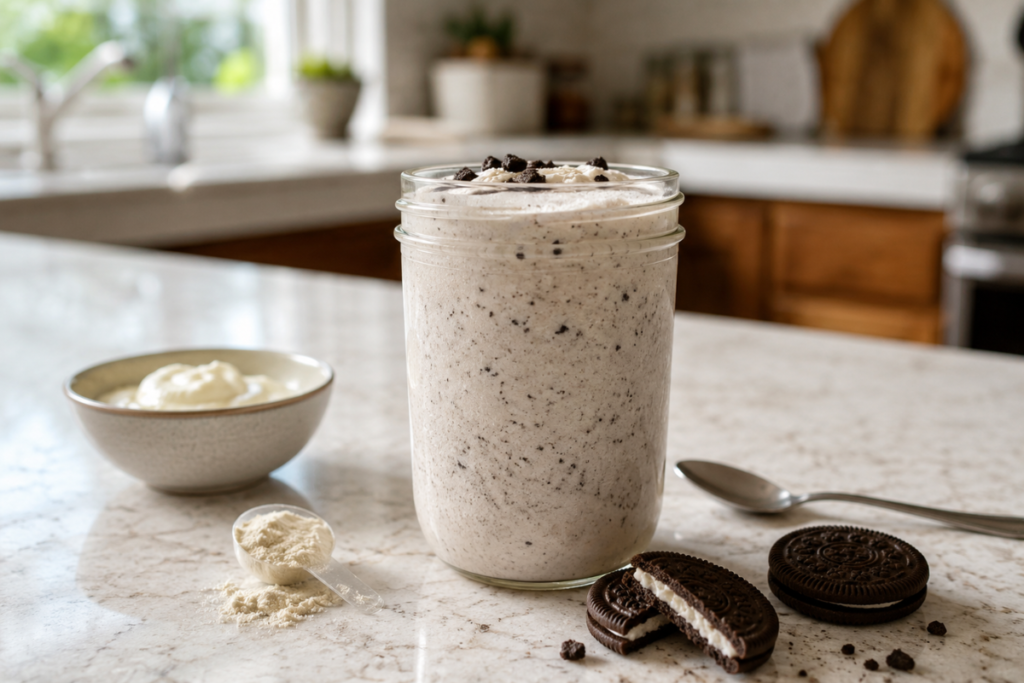
11. Oreo: The Dessert-Style Protein Shake
This dessert-style shake suits readers who want a cookies-and-cream option built with vanilla protein powder.
Its defining ingredients are milk, vanilla protein powder, Greek yogurt, cocoa sandwich cookies, and ice. Use 3/4 cup milk and two cookies for one shake, adding only enough ice to chill and thicken it without muting the cookie flavor.
Pinterest autocomplete includes “protein shake oreo,” “protein smoothie oreo,” and “high protein oreo smoothie,” supporting this distinct flavor branch. For a lower-sugar variation, use one cookie instead of two and add 1 teaspoon unsweetened cocoa powder; it is not nutritionally equivalent to the original.
The final piña colada shake closes the collection with pineapple and coconut.
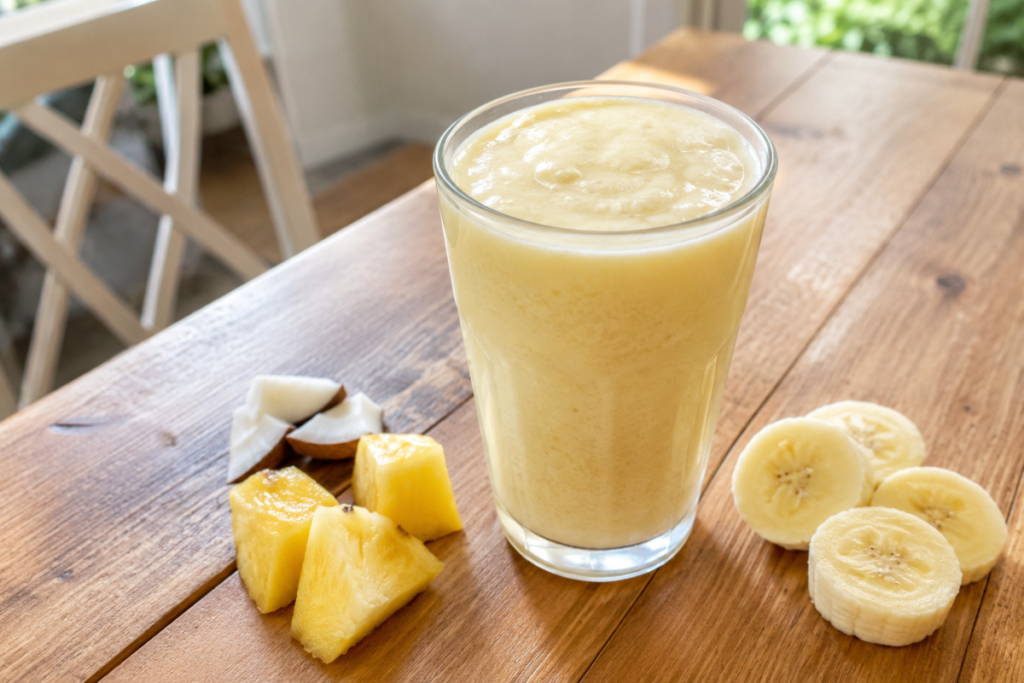
12. Piña Colada: The Pineapple-Coconut Finish
This tropical shake suits readers who want to finish the collection with a bright pineapple-and-coconut flavor.
Its defining ingredients are coconut milk beverage, frozen pineapple, banana, Greek yogurt, and optional vanilla protein powder. Start with 3/4 cup coconut milk beverage for every 1 1/2 cups frozen fruit to keep the shake thick but drinkable.
Pinterest autocomplete connects protein smoothies with coconut milk and pineapple juice, supporting this pineapple-coconut combination. If the mixture becomes too thick, blend in coconut milk beverage 1 tablespoon at a time until it circulates freely.
Storage and make-ahead guidance comes next.
Storage and Meal Prep Without a Separated Mess
Refrigerate a freshly blended shake immediately in a tightly sealed container at 40°F (4°C) or below and drink it within 24 hours for the best texture. Separation is normal; shake for 10 seconds or reblend for 10 seconds.
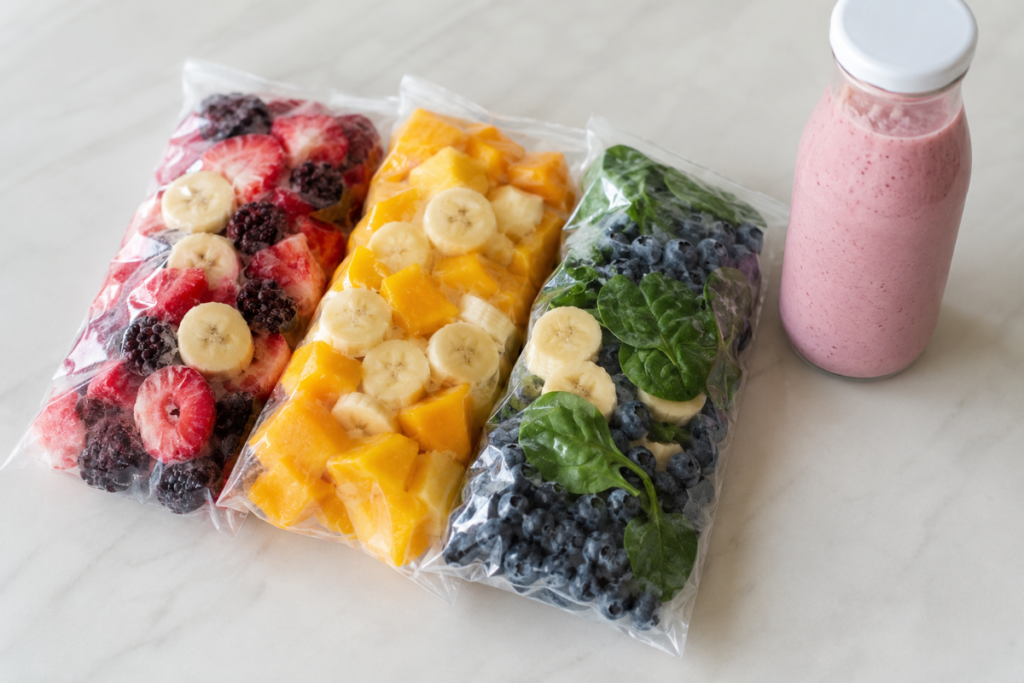
For freezer packs, portion only the solid ingredients into airtight bags, press out excess air, and use them within 8 weeks. Add milk, coffee, yogurt, and protein powder only when blending.
If freezing a finished shake, leave 1/2 inch of headspace, thaw overnight in the refrigerator, then reblend for 10 seconds. Discard dairy- or produce-based shakes left out more than 2 hours, or more than 1 hour above 90°F (32°C).
Blender Notes for Personal and Full-Size Machines
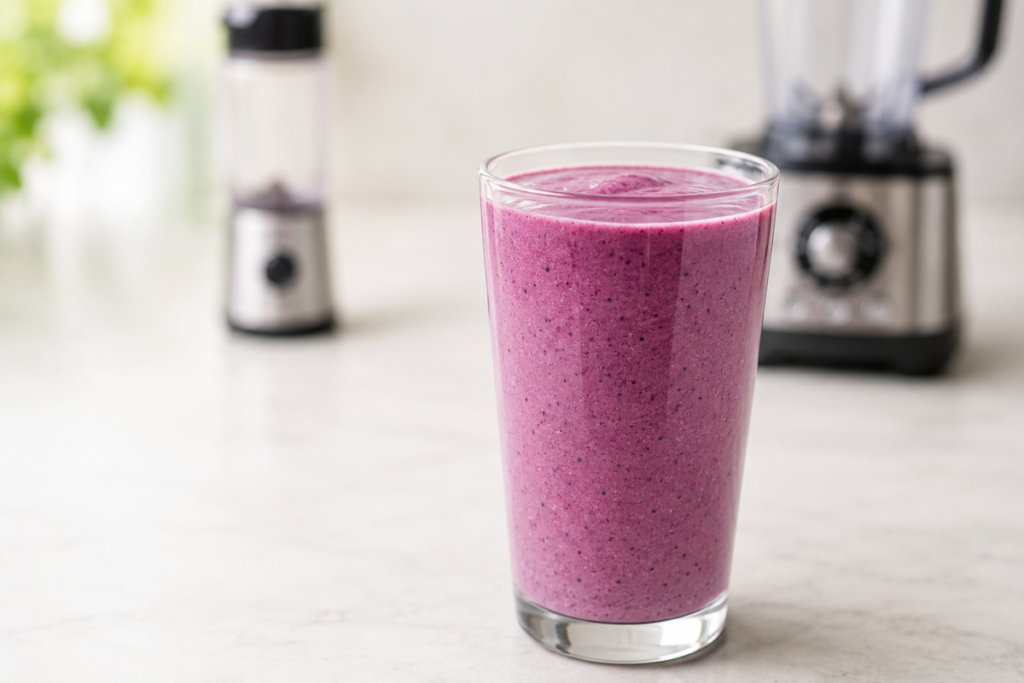
These 12 shakes do not inherently require a high-power blender. A budget personal blender can handle one serving when frozen fruit is cut into roughly 1-inch pieces and the cup stays below its maximum-fill line.
For an inverted screw-on blade cup, follow the manufacturer’s loading order rather than the upright-jar sequence; many place frozen ingredients in first and liquid closest to the blade lid.
A full-size upright blender is more practical for double batches or bulky freezer packs. If either machine stalls, stop the motor completely before redistributing ingredients. Choose a compact personal blender for single servings and lower cleanup; choose a full-size model for frequent multi-serving batches.
Frequently Asked Questions
Can I make a protein shake without protein powder?
Yes. Greek yogurt, cottage cheese, milk, soy milk, nut or seed butter, oats, and chia seeds can supply protein while fruit determines the flavor and frozen texture.
Is milk or water better for a protein shake?
Milk makes the shake creamier and contributes nutrients; water creates a thinner blend without adding calories. For these recipes, keep the specified liquid because switching to water changes both body and flavor.
Can one of these protein shakes replace a meal?
Not automatically. Assess the complete recipe’s calories, carbohydrates, fat, fiber, and micronutrients against your individual needs before regularly using it in place of a balanced meal.
